Erectile dysfunction and low testosterone: how the two relate and what a workup covers
By Chad Barnsdale · Updated 2026-09-26
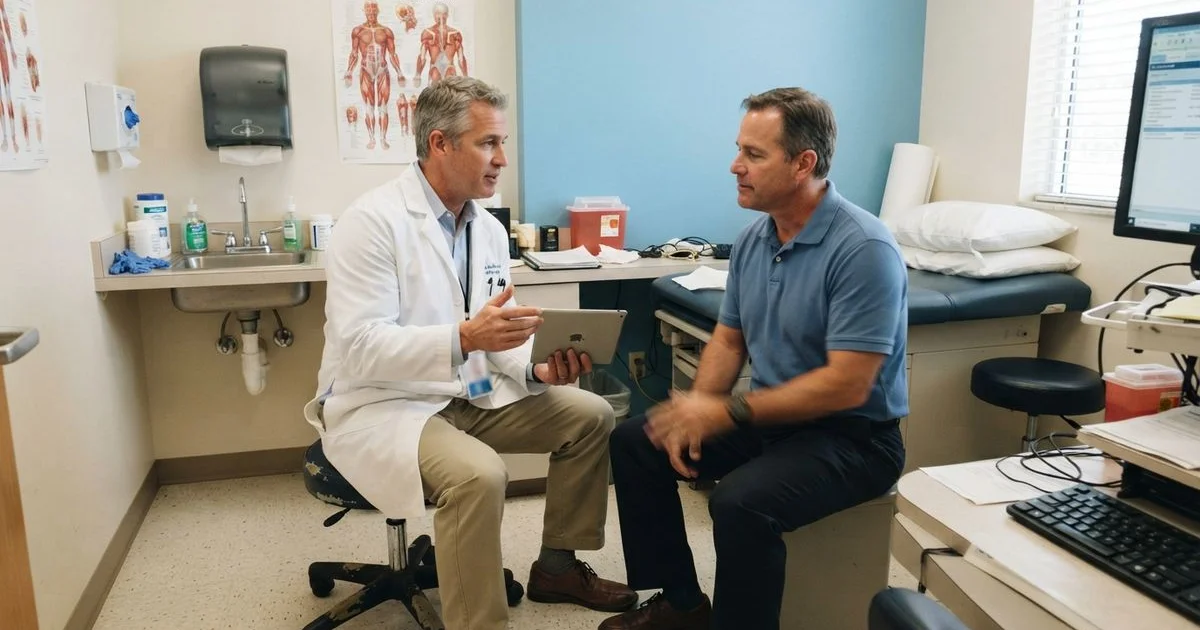
This guide is general information, not medical advice. ED can have serious underlying causes; see a licensed clinician for assessment.
Search data shows erectile dysfunction treatment is one of the most searched topics around this niche. Many men arrive at a testosterone clinic because of ED, and many ED clinics also offer hormone testing. Understanding how the two relate helps you pick the right door.
Related, but not the same
Low testosterone can reduce sex drive and may contribute to erection problems. ED, however, often has other drivers: blood vessel health, diabetes, high blood pressure, certain medications, sleep, stress, alcohol, and relationship factors. So a clinician’s first job is to sort out which factors apply to you.
| Possible contributor | What the clinician may check |
|---|---|
| Hormones | Total and free testosterone, repeat morning test |
| Blood flow and heart health | Blood pressure, cholesterol, history |
| Metabolic | Blood sugar, weight |
| Medications | Review of prescriptions and supplements |
| Mental health | Mood, stress, sleep |
| Lifestyle | Alcohol, smoking, activity |
What a sensible workup includes
A good assessment covers history, medications, a physical exam, and blood work. Hormone levels are one input. If testosterone is measured low on repeat morning tests and symptoms fit, treatment of low testosterone may be discussed. If ED continues, other options may be considered separately. A clinic that offers one product for every case is not doing a workup.

Choosing between clinic types
The directory has a dedicated sexual health and ED clinics hub, and separate groups for men’s health, hormone, and primary care practices. Roughly speaking:
- ED-focused clinics concentrate on erection treatment and may or may not test hormones.
- Men’s health and hormone clinics concentrate on testosterone and often offer ED treatment as well.
- Primary care can screen for the broad causes and heart risks and refer onward.
None of those is automatically better. What matters is whether the clinic looks at the full picture.
Privacy and tone
Reviewers in this directory often praise friendly, welcoming staff and clinicians who listen without rushing, which counts for a lot in a topic men find hard to discuss. Those are reviewers’ own experiences. If you feel judged or hurried, that is a legitimate reason to try elsewhere.
Combined treatment and cost
Some clinics bundle testosterone therapy with ED medication, and bundles can obscure costs. Ask for each item priced separately: consultation, labs, hormone treatment, ED medication. Compare a twelve-month total, and ask what happens to the plan if one part stops being needed.
Questions to ask
- What causes of ED will you look at besides hormones?
- What tests do you order, and what do they cost?
- If my testosterone is normal, what happens next?
- If treatment is recommended, what are the risks and the monitoring?
- Can you separate the price of each item?
Next steps
The cost tools on the home page can help you budget, and How We Rank explains how listings are scored. Whatever the cause turns out to be, a clinician who explains plainly and does not promise a result is the one to trust.
Questions people ask
- Does low testosterone cause erectile dysfunction?
- It can contribute, but ED has many causes including blood flow, diabetes, medications and stress. A clinician looks at the whole picture instead of assuming one cause.
- Will testosterone therapy fix ED?
- Not necessarily, and no clinic can promise it will. Whether it helps depends on the cause, which is why assessment comes first.
- Should I go to an ED clinic or a hormone clinic?
- Either may be appropriate. Ask what each tests, who prescribes, and whether the clinic looks at hormones and other causes.
- Is ED a sign of a heart problem?
- It can sometimes be an early indicator of cardiovascular issues, which is a reason to have it assessed by a clinician rather than self-treating.